THANK YOU FOR SUBSCRIBING

× 
Food and Beverage Tech Review Weekly Brief
Be first to read the latest tech news, Industry Leader's Insights, and CIO interviews of medium and large enterprises exclusively from Food and Beverage Tech Review
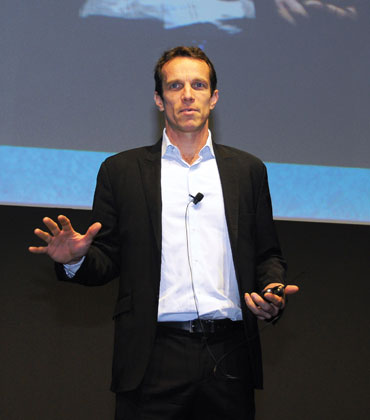
By Vincent Doumeizel, VP for Food & Sustainability, Lloyd’s Register
Blockchain to Drive Food Safety and Sustainability

By Enrique Leon, AI Enterprise Architect, American Sugar Refining Inc
Enhanced Precision Agriculture using Cloud Based AI

By Ruohan Liu, Senior Director, Global Operations, Agriculture Supply Innovation, PepsiCo
How Cloud Computing Impacts Precision Agriculture Technology

By Keira Lombardo, Chief Strategy Officer, Cal-Maine Foods Inc
Building Durable Growth in Food Systems

Emerging Technologies Driving the Blue Economy
Guillermo Renancio Artal, Director Of Technology, Expansion and Strategic Partnerships, New Pescanova Group
 Guillermo Renancio Artal, Director Of Technology, Expansion and Strategic Partnerships, New Pescanova Group
It has been more than 10 years since the publication of a reference book in the world of innovation by the Belgian economist Gunter Pauli, The Blue Economy, which presented 100 models of innovation and sustainable business linked to the marine world that allowed the development of sustainable business models on local communities and that also protected the seabed and even helped the regeneration of the same.
What more than 10 years ago became a milestone when we thought that we could generate business models through sustainable innovation linked to the sea and the oceans, today this blue economy model, also closely linked to another well-known model such as the circular economy, is also a green model of sustainable business development. To achieve the objectives of the blue economy, it was necessary to make the transition from the emerging technologies we know about to this type of blue business model. As a result, today, we are already talking about blue and green technologies as the main factors in the development of new business models linked to nature.
One of the great challenges presented by the blue economy is to be able to link the technologies that have been emerging from large factories or industries (we recognize as industry 4.0 associated with technologies such as the internet of things, Big Data or artificial intelligence, among others) combined with those tools that have helped to better transfer the knowledge (that we could understand as this digital transformation in which the user is digitized and performs its work in a better way supported by simple digital tools). Adding to this challenge of this technology transfer, the end users of this sort of blue and green technologies are far away from a typical digital user as we know in our society, so we need to understand the deployment of blue and green technologies represent a complete cultural transformation.
“Nowadays, the use of green blue technologies can be said that it has already been divided into six pillars clearly oriented to that model of sustainable business development”
Nowadays, the use of green blue technologies can be said that it has already been divided into six pillars clearly oriented to that model of sustainable business development. Those pillars are:
• Regenerative and Aquaculture &Seaculture
• Regenerative Agriculture
• Sustainable Construction and Biophilic Design
• Green Energy Transition
• Water conservation
• Wildlife and Biodiversity Conservation or Restoration
We all understand that emerging technologies are just tools that help to achieve our business goals, but in the case of the blue economy, there is already a human awareness of the need to develop this type of sustainable business, and we also encourage collaborative development models through circular economy principles.
Today, we find a lot of examples of the use of the Internet of Things impacting sustainability, for example, for forest conservation or the control of environmental parameters in aquaculture areas in the sea cages with multi-parameter probes connected to an unmanned surface vehicle (USV), the Big Data that allows us to understand and know the environmental evolutions and how to apply this knowledge to the irrigation of our fields in agriculture combined with the use of hyperspectral cameras in drones, or the use of artificial intelligence through images and videos to know the growth and welfare of animals on the seabed and to observe how, for example, the marine ecosystem is improved by creating artificial reefs and observing their evolution over time.
Possibly the great challenge ahead of us is to understand that this type of emerging technology is not only useful in the improvement of certain productive environments that are logically based on business models already mature and very recognizable in most countries of the first world. These technologies can become blue and green and help local communities in third-world countries develop collaborative and circular sustainable business models that allow them not only to protect their environments but also to create jobs and thus increase the social welfare and wealth of their people.

Read Also

Enhanced Precision Agriculture using Cloud Based AI
Enrique Leon, AI Enterprise Architect, American Sugar Refining Inc

How Cloud Computing Impacts Precision Agriculture Technology
Ruohan Liu, Senior Director, Global Operations, Agriculture Supply Innovation, PepsiCo

Building Durable Growth in Food Systems
Keira Lombardo, Chief Strategy Officer, Cal-Maine Foods Inc

From Roadmap to Reality: Scaling Technology with Purpose
Cameron Fiorini, Vice President of Digital & Technology, Foxtail Coffee CO

Why Restaurant Technology Should Be Designed For People, Not Just Performance
Brianne (Lane) Harvey, Director of Process + IT, Apicii Hospitality
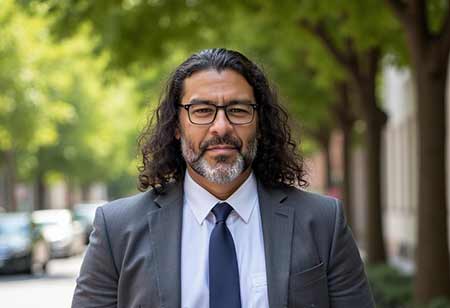
Transforming the Beverage Alcohol Industry
Todd Morillo, Director of Sales Technology, Eagle Rock Distributing Company


Top
